Table of Contents
This report is available in accessible HTML and ASL formats. A PDF version of the report is also available.
Our Land and People Acknowledgment
We at APSEA acknowledge that we live and work in Mi’kma’ki, the traditional territory of the Mi’kmaq People. We recognize the Mi’kmaq, Wolastoqiyik, Peskotomuhkati Nations of the Wabanaki Confederacy, Innu, Inuit and Beothuk as Indigenous land keepers in Atlantic Canada, and their vital role in protecting and stewarding traditional territories. We recognize our shared responsibility as Treaty People.
We recognize African Nova Scotians as a distinct group and acknowledge that people of African descent have lived in the Atlantic region for over 400 years, contributing to the infrastructure and economic wealth of the towns and cities they helped to build, but from which they could not benefit. We honour and offer gratitude to those ancestors of African descent who came before us to this land.
We also affirm accessibility is a human right and strive to reduce and remove barriers wherever possible in our work.
We at APSEA are committed to reconciliation, respect, and justice for all communities. These principles guide all work we do.
APSEA Act Regulation 43 message from Superintendent
Chair and Board of Directors
Atlantic Provinces Special Education Authority
In accordance with Regulation 43 of the APSEA Act, I submit herewith this report on the Atlantic Provinces Special Education Authority (APSEA) for the school year ending July 31, 2025.
Respectfully submitted,
Melina Kennedy
Superintendent
About APSEA
Mission
APSEA collaboratively provides responsive educational services that are accessible and inclusive for learners who are blind, have low vision, and/or are Deaf, deaf and hard of hearing.
Vision
The children and youth we support achieve individualized success in learning and life.
Core Values
- Learners First: We focus on and prioritize each learner’s unique strengths and needs, delivering personalized support to foster their growth and success.
- Collaboration: We build strong partnerships and value diverse perspectives
to support learner success. - Equity: We support equitable access, and responsive educational opportunities for learners.
- Innovation: We embrace research-informed approaches to continuously improve how we meet the needs of learners.
Message from the Superintendent
Dear APSEA community:
As I begin the role of Superintendent and learn more about APSEA, I see the past year has been marked by meaningful accomplishments across the organization, thanks to our staff team, learners and families, and the support of our partners. It advances important work that reinforces our shared commitment to the children and youth we serve.
A key focus was the development of our new strategic plan. Through thoughtful collaboration, our mission, vision and core values we revisited to ensure they reflect both who we are today and the goals we aspire to achieve. This process reaffirmed our commitment to inclusion, accessibility and the educational success of the children and youth we serve. Gratitude to everyone who contributed their time, perspectives and expertise.
The new 2025-29 strategic plan provides a strong foundation and a clear direction for our next steps. I am committed to bringing this plan to life with you through thoughtful implementation, collaboration and a steady focus on the needs of the children and youth we serve. I look forward to the progress we will make together as we move into this next chapter for APSEA.
Thank you for your trust and collaboration as we strive to build environments that support every learner’s success.
Melina Kennedy
Superintendent
Programs and Services
Number of children and youth receiving services per province
Overview by Region
| Learners Receiving APSEA Support (2024-2025) | BLV | DHH | Total |
|---|---|---|---|
| Nova Scotia | 243 | 527 | 770 |
| New Brunswick | 146 | 281 | 427 |
| Prince Edward Island* | 50 | 10 | 60 |
| Newfoundland and Labrador* | 61 | 18 | 79 |
| Total | 500 | 836 | 1336 |
*In Newfoundland and Labrador and Prince Edward Island children and youth who are Deaf or hard of hearing (DHH) receive support from school district employees. Children and youth who are Blind and have Low Vision (BLV) in Newfoundland and Labrador receive support from district employees. These numbers reflect learners who participated in virtual learning opportunities, in-person gatherings and/ or received services from Education Support Specialists-ASL and Deaf Mentors and Mentors for Students who are BLV, Orientation and Mobility staff, Speech Language Pathologists, and Education Support Teacher-Access Technology.
APSEA’s Strategic Plan
APSEA concluded the 2021–2024 Strategic Plan with a focus on strengthening service delivery, enhancing staff capacity, and deepening partnerships across Atlantic Canada. Over the term of the Strategic Plan, APSEA redesigned its service delivery model to ensure culturally and linguistically responsive, inclusive, and equitable programs for learners who are blind and have low vision and/or Deaf, deaf, and hard of hearing. We also advanced performance management processes, integrated Autism in Education more fully, and expanded collaborative networks to maximize support for children, youth, and families. These achievements have positioned APSEA to build on a strong foundation as we look toward the future.
The development of the 2025–2029 Strategic Plan has been guided by extensive consultation with APSEA staff, learners, families, and community partners. Through surveys, focus groups, and collaborative discussions, we gathered diverse perspectives to ensure the plan reflects shared priorities and lived experiences. This input shaped our renewed mission, vision, and values, and informed strategic focus areas that emphasize learner success, equity, and innovation. Together with our educational and community partners, APSEA remains dedicated to creating accessible, inclusive, and learner-focused education that empowers children and youth to achieve success in learning and life.
In-Person Supports for Learners
At the heart of APSEA’s approach is a commitment to robust in-person programming. Most of our support is delivered face-to-face, with APSEA teachers and specialists working collaboratively with learners in their familiar environments – early learning centres or homes, schools, and the community. This hands-on, collaborative model ensures personalized support and improves the individualized nature and responsiveness of learning opportunities.
Overview of In-Person Instruction for Learners
Individualized learner instruction in areas of identified need based on the Expanded Core Curriculum (ECC) or Developmental Skills Inventory (DSI). (All four provinces)
Early Intervention of pre-school aged learners for sensory development and visual or non-visual access. Support and strategies are also provided to families and early learning centre staff. (BLV) (NB, NS, PE)
Early Intervention of pre-school aged learners for auditory device retention and modeling language acquisition. During these sessions language strategies and auditory resources are provided to parents. (DHH) (NB, NS)
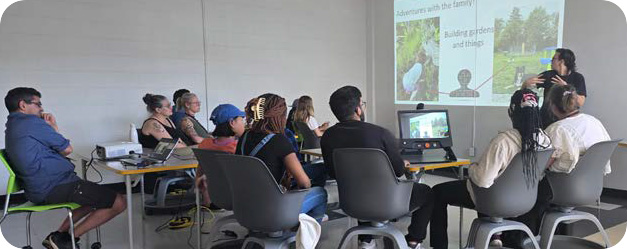
In class instruction to enhance access to curriculum and instruction. (BLV/DHH) (NB, NS, PE, NL)
Interpretation services both for ASL acquisition for the learner as well as communication while at school. (DHH) (NB, NS)
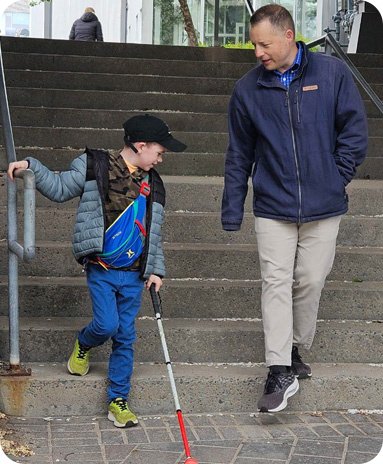
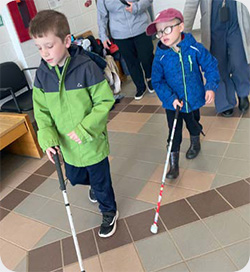
Orientation Mobility small group instruction provided an opportunity for learners from across the province to get together and work on orientation and mobility goals. Route planning, problem solving, and safe travel skills are all part of the activities. (BLV) (NB, NS, PE)
Regional small group opportunities for learners with similar language and/or auditory goals. (DHH) (NB, NS)
Access Technology small group instruction
Small groups of learners got together to work on similar assistive technology goals. (BLV) (PE)
Early Learning small group instruction Throughout the school year, families and young learners got together to enhance movement, listening, and visual skills. (BLV) (PE)
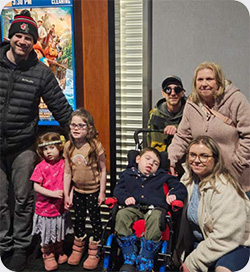
Described Videos in local cinemas provided opportunities for learners and families to get together and learn more about described videos in local cinemas. It showcased an accessibility feature that enhanced the cinema experience for learners who are blind and have low vision. (BLV) (NS, PE)
Collaboration with cnib & Vision Loss Rehabilitation
Working together with cnib and Vision Loss Rehabilitation, provided opportunities for learners and families to develop specific skills while learning about the variety of resources available to them. (BLV) (NB, NL, NS, PE)
Accessible Sports
Staying active is important. Students, their peers, and teachers were taught how to play goalball and boccia ball. This is to encourage ac-tive participation of all learners while enjoying an accessible sport. (BLV) (NB, NL, NS, PE)
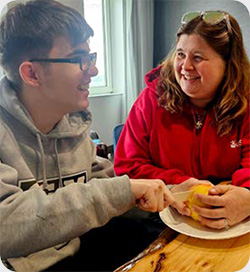
Daily Living Skills bring students together to learn specific daily living skills that were important to them. (BLV) (NB)
Device retention strategies and presentations are shared with learners in person by educational audiologist, teachers and education support specialists on the importance of consistent amplification usage. (DHH) (NB, NS)
In-Person Supports for Educational and Professional Teams
Access in-services to discuss strategies within early learning and school environments to develop optimal visual or non-visual access to instruction. (BLV) (NB, NL, NS, PE)
School in-services to assess auditory access and discuss strategies within the classroom to optimize access. (DHH) (NB, NS)
Ongoing Access Support
Education support teachers and APSEA staff offer ongoing support to school staff to discuss auditory access, or visual, non-visual, and tactile access in their classrooms. (BLV/DHH) (NB, NS, PE)
Joint audiologist visits to assist families and learners’ amplification requirements. (DHH) (NB, NS)
Virtual Supports for Learners, Families, and Educational Partners
APSEA provides select programs and supports through online learning. All the virtual opportunities are intended to supplement the in-person supports provided to learners.There are a variety options designed to be responsive to the needs of learners, school teams, and families. Some of the offerings are designed for learners to target specific learning outcomes, encourage discussions, and deliver relevant online learning opportunities to support real-life experiences. Supports are also available for families and educational partners to build access strategies and cultural awareness for learners through collaboration and knowledge sharing.
Sample of Virtual Supports Available to Learners (open to all learners across Atlantic Canada)
Braille Clubs (Novice and Intermediate):
These clubs are a year-long opportunity for braille readers across the Atlantic Provinces to come together to learn or reinforce braille skills and celebrate all things braille. Participants have an opportunity to meet and work with other students who know or are learning braille.
ARC (APSEA Recreation Club):
This is a fun year-long virtual space for learners in grades 6 to 12 across the provinces to connect with peers, participate in games, activities, and share interests. This group focuses on exploring various ways to enjoy recreation and hobbies while building confidence and social skills. The club is facilitated by Mentors-BLV.
ASL Cohorts:
These academic-year long cohorts provide Deaf learners with first-language ASL modeling and a chance to connect with peers from across provinces. Once registered, learners are placed in a group that matches their ASL level so they can grow and learn alongside others at their pace. From school vocabulary to the language of feelings, we believe in learning that fits, so we adjust topics based on learner interests and skills.
My Journey, My Voice:
Facilitated by professionals with both subject matter expertise (EST – Social-Emotional Learning) and lived experience (DHH Mentor), this six-week program supports hard of hearing learners in exploring identity and building resilience. Conversations are responsive to learner needs and cover topics such as device use, auditory fatigue, communication styles, and fitting in.
Transition Planning:
Designed to assist DHH high school learners consider their auditory environment requirments for both post-secondary studies and entering the workforce. These online groups join students from all four provinces to learn from DHH adults with lived experiences about the various supports available to them as well as the needs each individual may have based on their future career path.
Virtual Consultation:
Consultation is offered by a variety of APSEA staff including Educational Support Teachers and Educational Support Specialists, representing a range of both professional and lived experience.
Sample of Virtual Supports Available to Families (open to all families across Atlantic Canada)
Unlocking the World of Braille: Fostering Literacy at Home:
An opportunity for families to learn more about braille and ways to support a braille learner at home. This interactive session explored the world of braille literacy and shared practical strategies and informative resources to help families feel confident in their ability to support a child on their braille journey. Topics covered included: the basics of braille, the progression of braille literacy, creating a positive literacy environment at home and partnering with educators.
Accessible Literacy at Home for Learners with Cerebral/Cortical Visual Impairment (CVI):
Facilitated by the APSEA Speech and Language Pathologist, and the Coordinator for Atlantic Provincial Connections – BLV. This session focused on literacy development for children with CVI and explored ways families and caregivers could support and engage learners with CVI in literacy activities at home that develop comprehension skills through visual, tactile, and auditory means. Additionally, this session explored how technology could be used to support literacy for learners with CVI.
Post-Secondary Success – Insights from Experience (Learners and Families):
Designed to support Deaf and hard of hearing learners and their families, this program offers guidance on self-advocacy, accessibility, and accommodations in post-secondary settings. As a four-part program, it uses a hybrid approach of virtual sessions, asynchronous resources, and an in-person opportunity to equip both learners and their parents/caregivers with tools for the transition beyond APSEA services.
ASL for Families:
This seven-week program offers a welcoming space where families come together to learn American Sign Language while exploring advocacy, Deaf identity, and community building. Many families return for multiple sessions and continue their engagement through other in-person APSEA events, demonstrating the meaningful connections and networks fostered here.
Estate Planning for Beneficiaries with Disabilities (Joint BLV and DHH):
This session was led by Tarah Sawler, an estate planning lawyer at McInnes Cooper and former student supported by APSEA. The importance of having an up-to-date Will, Power of Attorney and Personal Directive was reviewed.
Sample of Virtual Supports Available to Educational Partners (open to all educational partners across Atlantic Canada)
Understanding Cerebral/Cortical Visual Impairment (CVI): A Guide for Educators:
This session introduced teachers and school team members to Cerebral/Cortical Visual Impairment, a condition that affects how the brain processes visual information. Educators gained an understanding of the characteristics of CVI. They also learned about practical strategies to effectively support students with CVI and foster a sense inclusive and success in the learning environment.
Lunch and Learn Session focusing on Supporting Learners with Vision Loss:
An opportunity for Speech Language Pathologists to learn about common types of visual loss and impact on verbal and non-verbal communication, language development and learning. Participants gained an understanding of ways to tailor interventions to meet the unique needs of learners with vision loss. This session was led by an APSEA Speech-Language Pathologist and Program Coordinator.
Exploring Multimodal Communication:
Led by an APSEA Speech-Language Pathologist and Program Specialist, this three-part series offers targeted support for educators working with learners who use Augmentative and Alternative Communication (AAC) through a Deaf and hard of hearing lens.
Coffee Conversations – Deaf Awareness and Exploring ASL:
This flexible three-part learning series offers both live and asynchronous options to blend foundational ASL communication skills with deeper understanding of Deaf culture. Facilitated by staff with first voice perspective, Coffee Conversations features relaxed discussions about everything participants want to know but might not have known who to ask. Topics include strategies and etiquette for navigating situations without interpreters, culturally appropriate ways to get someone’s attention, and common misconceptions about Deaf people.
Gatherings for Learners and Families
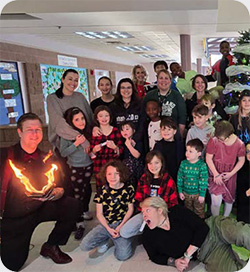
- Cultivating connections: Opportunities for learners and their families to come together for community building and relationship development
- Back to School Fall Festival – 76 attendees (BLV: 2 families; DHH: 16 families; Dual Service: 1 family)
- Family Fun Day at the Farm (BLV) in New Brunswick – 58 participants
- APSEA at Brigadoon Family Camp – 79 attendees (BLV: 8 learners; DHH: 16 learners)
- The Art of Connection (DHH) – (16 attendees; 5 learners)
- Family Fun at the Fair-Year End Celebration- (BLV: 16 total participants; 5 learners)
- Family Bowling Connect Night in Gander, NL (Deaf identity programming with community building focus -11 learners)
- Good Vibes DHH Event in Brackley Beach, PEI
- ASL Storytime with hands on learning opportunities for language acquisition (16 learners)
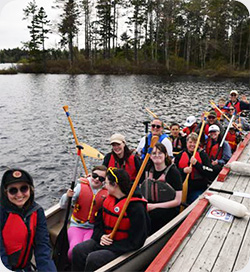
- Brigadoon Summer Camps - Camp Whatcha Say (DHH) - 40 campers; Camp See-Ya (BLV) – 30 campers
Collaborations
Try It Hockey
In Collaboration with Canadian Blind Hockey and St. Mary’s University, APSEA supported a day for BLV learners to experience skating and discover Blind Hockey.
Teddy Bear Clinic
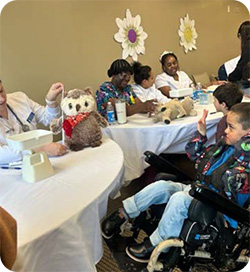
A collaboration with St. Martha’s Hospital Auxiliary (Mayfest) is a fun and engaging event helping children feel more comfortable with medical visits. Students brought their own teddy bear and described their injury or illness to healthcare professionals. Students acted as the support person for their teddy bear going through a mock medical appointment, including triage, eye exams, blood collection, x-rays, casting, mental health and more.
Orthoptic Inservice
APSEA staff presented to Orthoptic students during their Low Vision Course regarding the process of Functional Vision Assessments. The presentation focused on the variety of ways we assess and observe functional vision through playbased activities, access to class materials, environmental print and in completing everyday tasks.
Post-secondary Presentations
APSEA staff (BLV and DHH) were invited to share their knowledge and experiences with groups of post-secondary students. The presentations focused on inclusion for all ages. These sessions occurred in-person or virtually. APSEA staff shared their knowledge, training, and skills in supporting learners with blindness and low vision with pre-service teachers and pre-service Educational Assistants enrolled in university and college courses. Additionally, professional learning on understanding cerebral/cortical visual impairment was offered to community organizations working with learners who have visual impairments.
Accessible Egg Hunt
In collaboration with cnib and the Halifax Regional Police, APSEA supported learners who are BLV in an egg hunt. A spring day filled with fun and activity. Learners had the opportunity to find beeping eggs located throughout an acces-sible playground. Locating the eggs and then turning them in for prizes, allowed many learners a first-time experience engaging in the thrill of an egg hunt.
New Brunswick Francophone Team
In New Brunswick, Education Support Teachers-BLV and Itinerants supporting learners with BLV in the Francophone School District came together to share opportunities for professional learning in the areas of braille, deaf blindness, and cerebral/cortical visual impairment.
Professional Learning
In August, the Educational Interpreter Services teams from NB and NS came together in Halifax for professional learning before the start of school year. Our Educational Deaf Interpreters and Educational Interpreters staff are with learners every school day and therefore it is important to host in-person professional learning prior to the start of the school year. Topics included keynote addresses from Erika Stebbings, Deaf and Indigenous lens practices, troubleshooting question and answer sessions, new staff orientation, language development and in-person staff meetings.
In October, the team supporting learners who are blind and have low vision, gathered for In-Person Professional Learning. They chose from two concurrent sessions and had the opportunity to teach and practice orientation and mobility skills. The Access Framework was introduced and working groups were formed to support equitable access for blind and low vision students within educational environments.
ACOM 2025 was a joint professional learning venture between APSEA, the Francophone O and M Specialists within the NB Department of Education and Early Childhood Development, and Vision Loss Rehabilitation - NB, NS, PE, and NL. During this conference, participants broadened their understanding of how to promote and develop critical thinking and problem-solving skills in learners. Additionally, participants engaged with a guest presenter during workshops to deepen their knowledge of best practices to support learners with deaf blindness in safe navigation and travel within multiple environments.
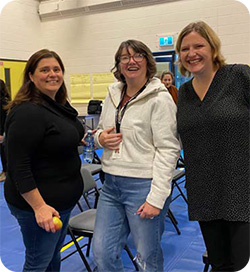
In May, the Deaf and Hard of Hearing Education Support Teachers from NB and NS came together in Halifax for training on digital assessments and early learner strategies. Our Early Learning Specialists provided field staff with lesson plan ideas and insights on how to approach their first few home visits when a new early learner is added to their caseload.
In June, our APSEA audiologist organized virtual presentations from the three main amplification manufacturers. These sessions explained recent upgrades to the manufactures’ latest models that our learners use.
Throughout the school year, several virtual sessions were offered to support teachers learn more about deaf blindness. These sessions were in collaboration with the British Columbia Provincial Outreach Program for Students with Deafblindness (POPDB).
Autism in Education and Collaborative Learning and Development
Autism in Education and Collaborative Learning and Development hosted the 2nd Annual Teaching to Diversity Conference in Halifax, NS on October 9 and 10, 2024. The conference was held in collaboration with the Atlantic Provinces Association for Behaviour Analysis, representing an interprovincial and multi-organization partnership. With a hybrid in-person and online model, the conference welcomed 137 in-person participants and 178 virtual participants.
Keynote presentations were provided by Dr. Adithyan Rajaraman and Dr. Holly Gover, international experts in the field of research-supported practices for autistic learners / learners with autism and by Nova Scotia invited speakers, Lana MacLean and Satie Borden, who shared a session entitled, “Teaching to Diversify: Leaning into The African Nova Scotian Village.” APSEA staff, educators, clinicians, and partner professionals from across Atlantic Canada shared their expertise through breakout sessions on topic in English such as, Cortical Visual Impairment: A Basic Understanding; ASD and Visual Impairments: Supporting Learners in an Inclusive Environment; Life after High School, Navigating Social Relationships; The Power Of Attention and Engagement, among many others. French sessions included, Trouble du spectre d’alcoolisation foetale (TSAF) – Parlons-en; and Comment assurer une meilleure transition vers la vie postscolaire.
Autism in Education and Collaborative Learning and Development celebrated a new milestone during the 2024-25 school year, hosting a total of eight webinars with more than 1300 registrations. Webinars, including our first French language webinar, were presented by APSEA professionals and partners across the Atlantic Provinces, highlighting and celebrating the cutting-edge work being done by Atlantic Canadian educators. Webinar topics and presenters included:
- Accessible Microsoft Word Documents
- A 4-part series focused on Supporting Positive Behaviour in Classrooms and Schools
- Créer des espaces sécurisants et bienveillants: le trauma en milleau scholaire
- Behaviour and Trauma Informed Approach-Taking Theory to Practice: Understanding Behaviour and Trauma Informed Care Strategies
- Positive Behaviour Intervention and Supports (PBIS)
- The webinar presenters have kindly given permission for their webinars to be recorded and archived on the APSEA website.
Interprovincial Professional Learning
The Coordinator for Autism in Education and Collaborative Learning and Development, in collaboration with the Interprovincial Professional Learning Working Group, has supported professional learning for educational personnel across the Atlantic Provinces.
At the invitation of APSEA’s partner provinces, the following professional learning was developed and shared:
Building a Toolbox of Strategies to Support Positive Classroom Behaviour
Target audience: Classroom Teachers and Support Staff
Presentation overview: This presentation is designed to equip school team members with practical strategies to enhance positive classroom behaviour. With a special focus on the vital role of classroom teachers and educational support personnel, we’ll explore proactive approaches to reduce behaviours that interfere with learning and participation at school and foster a learning environment where all students experience success.
Leadership in the Role of Educational Support
Professional: Considerations to Support Success (3-Part Professional Learning Series)
Target audience: Educational Support Professionals, Student Services Personnel, Specialists, Consultants, Mentors, Leads, etc.
Presentation overview: This presentation focuses on topics such as relationships and credibility: leveraging soft skills; cultural and professional humility; interprofessional collaboration competencies; equipping team members with knowledge and skills for success through training and coaching; identifying quick wins; effective communication and feedback; and reflecting on the impact of coaching. The APSEA Professional Learning Working Group launched our newest professional learning opportunity – a chance to get to know our colleagues and to learn more about our respective work within the organization.
Lunch and Learn: Colleague Connections
Takes place via Zoom on Fridays at 12:00 p.m. Atlantic Time / 12:30 p.m. Newfoundland Time. APSEA staff are invited to grab their lunch and join their colleagues for a virtual half hour of informal discussion and collaborative learning.
APSEA Accessibility Services Team
The Accessibility Services team is responsible for booking and providing services to increase access for APSEA staff. Services include ASL-English interpreting, ASL translation, ASL classes, Spoken language interpreting, and CART services. Some services are provided directly by our team, and others are booked through external service providers.
Interpreting Services
The ASL-English Staff Interpreting team welcomed a new part-time interpreter this year. This brings the team to 2 part-time Staff Interpreters, one full-time Staff Interpreter and a full-time Coordinator of Interpreting Services who also acts as a part-time Staff Interpreter. The team worked hard to provide language access to staff across the Atlantic provinces.
This past year the Coordinator of Interpreting Services booked 977 interpreting assignments, and 829 interpreting assignments were completed.
- The ASL-English Staff Interpreting team was supported by community (freelance) ASL-English interpreters 309 times.
- Spoken language interpreters were used 71 times.
- CART was used 13 times.
ASL Translation
In December 2024 our ASL Translation Lead completed 6 months of translation training at the Rochester Institute of Technology, National Technical Institute for the Deaf, and received the Certificate in Signed Language Translation. The ASL Translation Lead worked collaboratively with other teams and departments at APSEA to help improve language access by completing 158 translations (27 policies, 120 emails, and 1 song).
ASL Classes
- Total number of cohorts: 5
- Total number of participants: 26 APSEA employees
Accessibility Advisory Committee
The APSEA Accessibility Advisory Committee is a legislative requirement under the Nova Scotia Accessibility Act. Our committee meets once a month during the school year to discuss ways to make APSEA more accessible by reducing and removing barriers, and sharing information and resources on accessibility best practices. In preparation of updating APSEA’s Accessibility Plan for 2026, the group reviewed our current plan and with the support of the Supervisor of Accessibility Services benchmarked the progress that has been achieved so far.
Work that Enables Our Impact
Production and Library Services (PALS)
The 2024–2025 school year brought exciting changes for the APSEA Library with its move to a new location. This transition provided an opportunity to re-evaluate and refresh the collection—removing outdated titles, improving organization, and enhancing accessibility. Titles are now arranged so that braille and print formats are clearly linked on the same shelf, making it easy to identify which books are available in multiple formats. Additionally, titles highlighting diverse voices have been featured to strengthen inclusion and representation.
Collaboration also remained a key focus this year. PALS partnered with the Dairy Farmers of Canada to produce some titles in their Teach Nutrition series in braille format, supporting inclusive learning and expanding access to educational resources in alternate formats for students across Canada.
Diversity, Equity and Inclusion
In 2024-2025, APSEA continued to move forward in our work around Diversity, Equity and Inclusion (DEI). We are proud to share some key highlights from this past year.
In February 2025, APSEA celebrated African Heritage Month with a virtual professional learning session. The NS provincial African Heritage Month theme “Legacy in Action: Celebrating Black Brilliance” highlighted the living legacy of Black Nova Scotians, honoring the impact and perseverance of the long-standing community. In June 2025 we marked Pride Season with another virtual celebration: “Pride Month 2025: Celebrating Queer Atlantic Canadian History.” These events helped us honour and recognize the diverse communities we serve and work within.
Throughout the year APSEA offered organization-wide professional learning opportunities on key DEI topics such as Unconscious Bias, Microaggressions, Authentic Allyship, and Anti-Racism. We also provided DEI sessions tailored to specific team needs which were included in regular meetings and gatherings. These sessions focused on topics like mental wellness, identity, privilege, and practical strategies for creating positive change. These workshops are part of APSEA’s continued commitment to building a respectful and inclusive workplace. The goal is to help all employees better understand how to recognize and address unconscious bias, develop cultural and language awareness, and understand the diverse and intersecting identities of the students, families, and staff we work with.
APSEA’s DEI learning and initiatives are essential to our growth as an organization. They support our goal to create safe, welcoming spaces for everyone where all people are respected, valued, and empowered to contribute.
Employee Recognition
APSEA Colleague Shout Out!
In May, APSEA launched an initiative aimed at recognizing and celebrating the great work being done by APSEA staff and increasing staff morale. The APSEA Colleague Shout Out! gives all APSEA staff the opportunity to send a message of gratitude or celebration to a colleague. The colleague being recognized also receive a certificate that states: “Congratulations on your Shout Out! Your hard work and dedication have not gone unnoticed. You go above and beyond, and it is very appreciated. Thank you for being a valuable member of the APSEA Team!” Between May 13th and June 30th, 129 APSEA Colleague Shout Outs were sent to recognize and celebrate our colleagues.
Nova Scotia Teachers Union (NSTU) Education Week Awards
In May, six Nova Scotia staff members were recognized for their outstanding work of promoting innovation in education. The theme, Empowering Futures: Innovation in Education, highlighted the importance of preparing students for the complexities of today’s society. The award recognized staff members for embracing educational innovation and preparing students for the future. Congratulations to Kelly McKeage, Joan Fillmore, Susan MacLean, Jennie Bovard, Jennifer Fancy and Sarah Lewis.
Internships
Each year APSEA attends the Mount Saint Vincent University (MSVU) community placement fair in the fall. This is an opportunity for students who are in their last year of their Education Degree to learn about alternate placements for the year. We were happy to host a community placement from March 17, 2025 through to April 16th, 2025. Time was spent with Education Support Teachers from DHH (Deaf and/or hard of hearing) and BLV (Blind/ Low Vision).
Orientation and Mobility (O and M) Internships: From April to August, APSEA O and M Specialists supported three students from the University of British Columbia who were completing their Orientation and Mobility internships in New Brunswick and Nova Scotia. During this training, APSEA Orientation and Mobility Specialists collaborated with the O and M interns to build their understanding of instructional practices to support the development of skills and knowledge across all O and M domains.
Revenue and Expenditure
Operating Expenses
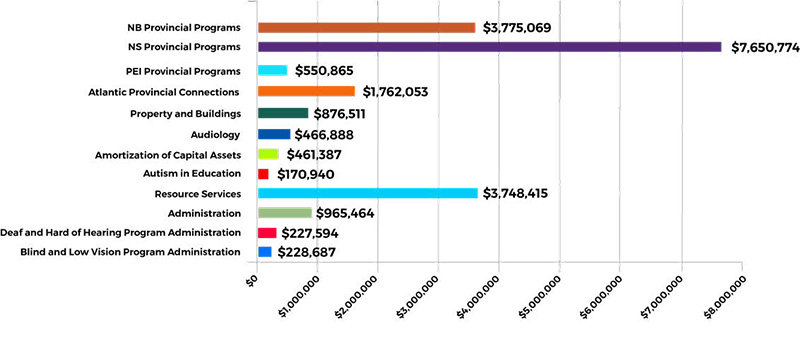
| Program | Expense |
|---|---|
| NS Provincial Programs | $7,650,774 |
| NB Provincial Programs | $3,775,069 |
| PEI Provincial Programs | $550,865 |
| Atlantic Provincial Connections | $1,762,053 |
| Property and Buildings | $876,511 |
| Audiology | $466,888 |
| Amortization of Capital Assets | $461,387 |
| Autism in Education | $170,940 |
| Resource Services | $3,748,415 |
| Administration | $965,464 |
| Deaf and Hard of Hearing Program Administration | $227,594 |
| Blind and Visually Impaired Program Administration | $228,687 |
Expenditure by Province
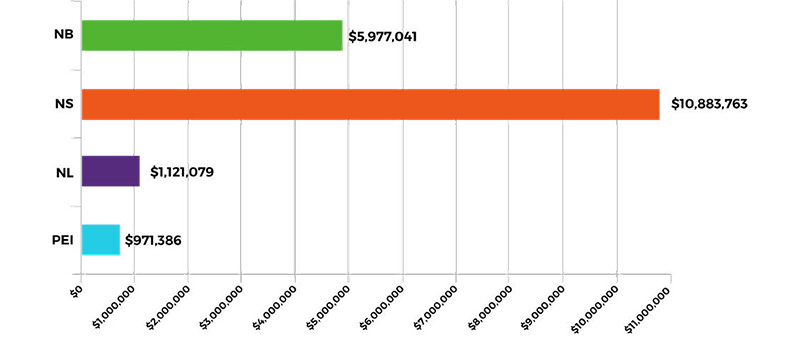
| Province | Expenditure |
|---|---|
| New Brunswick | $5,977,041 |
| Nova Scotia | $10,883,763 |
| Newfoundland and Labrador | $1,121,079 |
| Prince Edward Island | $971,386 |
Operating Revenue
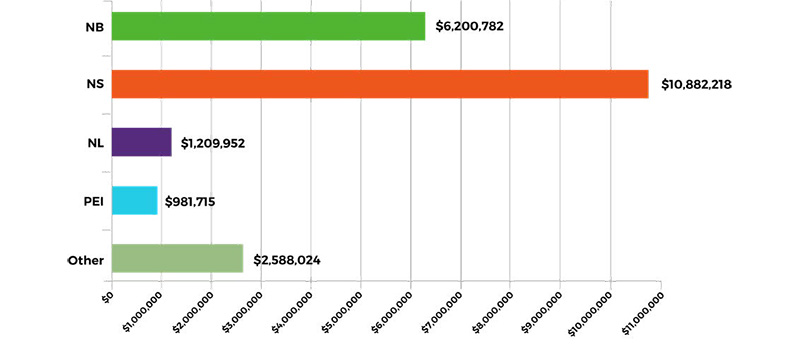
| Province/Other | Revenue |
|---|---|
| New Brunswick | $6,200,782 |
| Nova Scotia | $10,882,218 |
| Newfoundland and Labrador | $1,209,952 |
| Prince Edward Island | $981,715 |
| Other | $2,588,024 |